
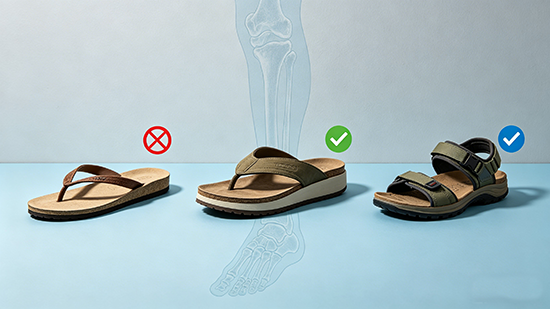

Summer heat often means ditching closed-toe shoes for something airy. Your immediate choice is usually between classic flip-flops, cushy slides, or strappy sandals. But not all open footwear is equal when it comes to foot health. While one pair might be fine for a quick beach run, another could cause plantar fasciitis, arch pain, or blisters if worn all day. So what do podiatrists actually recommend?
Let’s start with traditional flat flip-flops. The cheap rubber version – the kind you grab at a drugstore – gets the worst grade. Why? Because to keep them on your feet, your toes must claw or grip the thong post with every step. This alters your natural gait, shortens the Achilles tendon over time, and offers zero arch support. Occasional poolside use is fine, but walking miles in flat flip-flops can lead to shin splints and heel pain. If you love flip-flop convenience, look for pairs with a contoured footbed, deeper heel cup, and durable posts (like those from OluKai or Vionic).
Slides have become immensely popular, largely because they feel more secure than flip-flops – no thong between the toes. But slides present a different problem: lack of rear strap. Your heel can slide off the back unless the footbed has a raised edge or deep heel cradle. Many cheap slides are just flat slabs of foam; your foot slides forward, and your toes over-grip again. Better-designed slides include a textured footbed, slight arch elevation, and a slightly raised heel cup. Some recovery slides (like Oofos or Hoka Ora) are actually podiatrist-approved because their soft, rocker-bottom soles reduce impact on joints.
Sandals (with adjustable straps) are usually the healthiest option. A proper sandal has three key features: a heel strap (to keep your foot from sliding), arch support, and a slight heel-to-toe drop (about 5-10mm). Brands like Birkenstock, Chaco, and Mephisto excel here. Their footbeds are molded to follow the natural shape of your foot, distributing pressure evenly. Adjustable straps also accommodate swelling – a lifesaver during long summer walks or travel days.
What about wearing open footwear for active use? Hiking sandals with toe protection (Keen, Merrell) are excellent for light trails and water activities. However, podiatrists warn against wearing any open footwear for heavy hiking or running – the lack of lateral support increases ankle sprain risk.
Key takeaway: It’s not about banning flip-flops or slides, but matching the shoe to the activity. Use cheap flip-flops for the beach locker room. Upgrade to quality slides for coffee runs or a pool day. Reserve strapped sandals for long walks, city tours, or casual work settings. Your feet will thank you by autumn. And one universal tip: never wear the same sweaty pair all summer without cleaning – bacteria love damp foam. Rotate between two pairs and wash them weekly with mild soap. Happy (and healthy) summer striding!