
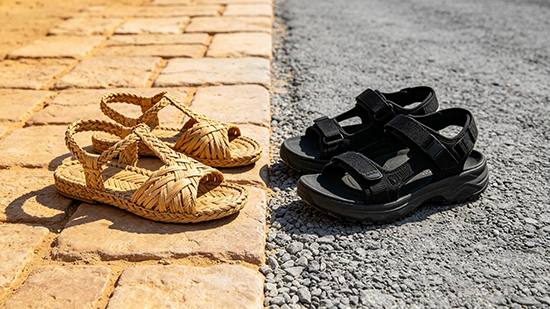

Before the sneaker, before the boot, there was the sandal. It is the oldest known footwear, with archaeological evidence dating back over 10,000 years. From ancient Egyptian woven papyrus soles to Roman caligae (military sandals studded with hobnails), sandals have protected human feet while keeping them cool – a design brief that remains unchanged today.
The oldest surviving sandals were found in Oregon’s Fort Rock Cave in the 1930s, woven from sagebrush bark and estimated to be 9,000 to 10,000 years old. Meanwhile, in Mesopotamia and Egypt, sandals were status symbols. Elaborate gold-leaf sandals accompanied pharaohs to the afterlife, while commoners wore palm-leaf or rawhide versions. The Romans perfected the “sandal as infrastructure” – their open-toed, strappy designs allowed soldiers to march hundreds of miles, and the hobnails provided traction on rough terrain.
After the fall of Rome, sandals largely disappeared from Western Europe during the Middle Ages, considered too pagan and impractical. They survived in warmer climates – India (chappals), Japan (geta and zori), Mexico (huaraches), and the Mediterranean (baxter-style leather sandals). The modern revival began in the early 20th century when European health reformers promoted “barefoot-adjacent” footwear. In the 1960s, hippie counterculture embraced leather sandals (Birkenstocks entered the US market around this time) as symbols of anti-establishment simplicity.
Today, sandals occupy a sprawling category: minimalist thongs (flip-flops), sporty slides, orthopedic Birkenstocks and Tevas, glamorous heeled sandals, and technical hiking sandals (like Keens, with toe protection). What’s fascinating is how digital nomadism and “gorpcore” (outdoor gear as fashion) have revived technical sandals. Strappy, adjustable sandals with Vibram soles are no longer just for kayaking – they’re seen on city streets paired with wool socks, a divisive but durable trend.
2026’s sandal trends emphasize modularity. Brands like Suicoke and Chaco sell separate straps and soles, allowing wearers to customize fit and color. Sustainability is also reshaping production: cork, recycled PET straps, and vegetable-tanned leather are standard for premium lines.
The sandal’s enduring appeal is its honesty. No other footwear is as open, literally and metaphorically. It asks for little – just a strap and a sole – and offers maximum breathability and connection to the ground. Ten thousand years later, we’re still walking in their footsteps.