
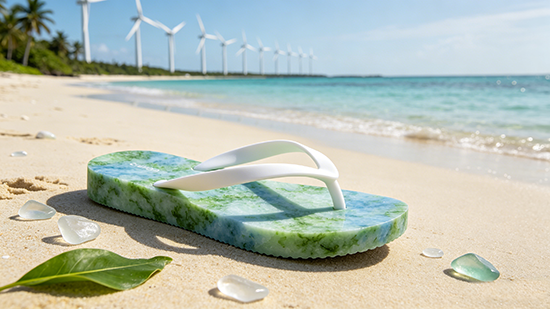

Few items of footwear are as universally recognized as the humble flip-flop. From post-beach showers to city commutes in tropical climates, they are a staple of casual convenience. Yet, for decades, the classic rubber flip-flop has carried a dirty secret: most are made from non-biodegradable PVC or EVA foam, and hundreds of millions end up in landfills or oceans every year.
But the industry is finally pivoting. A wave of sustainable innovation is reshaping how brands approach this simple sandal. Driven by consumer demand for eco-conscious products and tightening regulations on single-use plastics, new materials and circular business models are emerging.
Leading the charge are flip-flops made from algae bloom biomass. Companies like Vivobarefoot and the startup Namuk have introduced models that harvest invasive algae from eutrophic waters, clean the ecosystem, and transform the biomass into flexible, durable soles. Other brands are turning to recycled ocean plastics – fishing nets, bottles, and even discarded flip-flops themselves. The Kenyan social enterprise Ocean Sole famously carves art and functional flip-flops from washed-up footwear, but now larger manufacturers are closing the loop, producing “circular flip-flops” that can be reground and remade at end of life.
Another notable trend is the rise of natural rubber and plant-based foams. Allbirds, known for wool sneakers, tested a flip-flop using castor bean oil and sugarcane-based EVA. Meanwhile, a handful of artisans in Brazil and Southeast Asia are reviving traditional techniques, crafting flip-flops from responsibly tapped tree rubber with cotton straps.
Of course, price remains a barrier. A sustainable flip-flop often costs three to five times more than a budget beach pair. However, travelers and eco-conscious consumers are increasingly willing to pay a premium for durability and low environmental impact. The message resonates: a flip-flop that lasts multiple seasons and biodegrades at the end is not just a purchase; it’s an investment in cleaner shores.
As summer 2026 approaches, expect to see more brands advertising their “carbon-neutral” or “ocean-positive” flip-flops. The challenge moving forward is scale and consumer education. But one thing is clear: the classic flip-flop is undergoing a green revolution – one step at a time.